
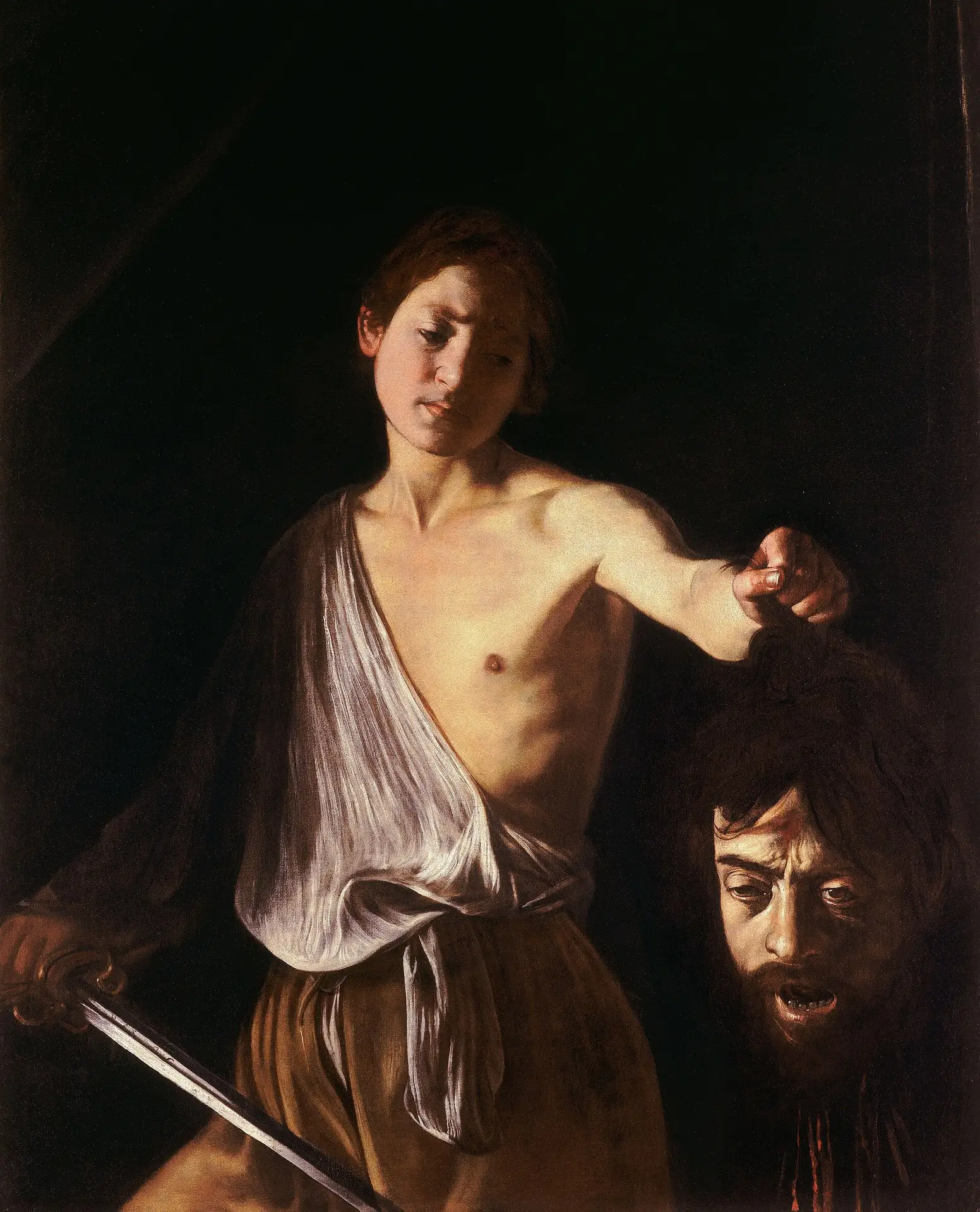
"David con la cabeza de Goliat" de Caravaggio: Una poderosa pintura que muestra el uso que Caravaggio hace del claroscuro para transmitir tensión y emoción.
En Roma, pocas experiencias en un museo resultan tan inmediatas como encontrarse frente a Caravaggio y darse cuenta de que el drama no está “en la historia”, sino en la luz. David con la cabeza de Goliat Es un cuadro que no te invita a admirarlo desde una distancia cortés. Te atrae hacia él, te hace escudriñar las sombras y, a continuación, revela el peso humano de la escena de una forma que resulta casi incómoda, en el mejor sentido posible. No se trata de una imagen heroica de postal. Es un momento suspendido entre la victoria y el arrepentimiento, pintado con una franqueza que sigue pareciendo moderna, sobre todo cuando la ves en persona en lugar de en una pantalla.
El escenario acentúa esa intensidad. El Galería Borghese No es un museo pensado para pasear sin rumbo fijo durante medio día. Es compacto, está bien comisariado y es famoso por su gran concentración de obras maestras, lo que cambia tu forma de ver las cosas. Cuando cada sala contiene una obra “imprescindible”, tu atención se agudiza. Empiezas a darte cuenta de cómo una obra marca la pauta para la siguiente, y de por qué ciertos cuadros —como el «David» de Caravaggio— no solo destacan, sino que marcan el tono emocional de la visita. Si llegas con un objetivo, te irás con un recuerdo más nítido, porque la galería premia más la concentración que la rapidez.
Guía de horarios de visita para ver el «David» de Caravaggio en la Galería Borghese
¿Qué es lo que hace que David con la cabeza de Goliat Lo que resulta inolvidable es cómo se niega a reducirse a un simple mensaje. Desde lejos, la composición se interpreta rápidamente: David, la cabeza cortada, el marcado contraste entre la carne y la oscuridad. De cerca, la interpretación se vuelve más lenta y extraña. Empiezas a interpretar el cuadro como una escena psicológica más que como una escena de acción. La expresión de David contiene el triunfo y se inclina hacia algo más tranquilo, casi reflexivo. La cabeza no es un trofeo lejano; está representada con una presencia que exige una segunda mirada. Este es el tipo de obra de arte que recompensa la paciencia, porque cuanto más tiempo te quedas, más... claroscuro parece más un recurso narrativo que un rasgo estilístico característico.
La arquitectura de la galería te ayuda a contemplar las obras de esa manera. En el interior Villa Borghese, las salas transmiten una sensación de intimidad, ya que están diseñadas para una observación cercana más que para el paso de multitudes. Esa cercanía es una ventaja con Caravaggio, porque sus cuadros se basan en sombras casi negras y luces cuidadosamente situadas. Se aprecia cómo pequeños cambios en la iluminación y el ángulo influyen en lo que capta primero la mirada. Basta con dar un solo paso para que la escena resulte más cruda o más compasiva. Esa experiencia cambiante es precisamente la razón por la que se trata de un cuadro que hay que “ver aquí”. En el Borghese, puedes dedicarle todo el tiempo que quieras sin sentir que te estás perdiendo el resto del museo, ya que toda la visita se concentra de forma natural.
Es aquí también donde la colección en su conjunto pasa a formar parte de tu comprensión. Ver Caravaggio En una sala en la que también pueden encontrarse esculturas importantes y otras obras de gran impacto, la comparación es inevitable. Te das cuenta de cómo la narrativa se transmite de forma diferente en el mármol que en el lienzo, de cómo distintos artistas representan el movimiento y la emoción, y de por qué la colección Borghese resulta tan satisfactoria incluso cuando solo dispones de un tiempo limitado para la visita. La vista se acostumbra rápidamente, y ese entrenamiento mejora la segunda mirada al «David». Una buena estrategia es ver el cuadro al principio y luego volver más tarde para una segunda visita más breve, cuando la energía de la sala haya cambiado y tu atención esté más concentrada.
Planifica tu franja horaria de dos horas y los controles de acceso
La experiencia en el Borghese se caracteriza por su estructura, y esa estructura puede jugar a tu favor si sabes aprovecharla. Piensa en tu visita como un espectáculo de dos horas cuidadosamente organizado, con un inicio y un final claros. Llegas, entras a la hora que te han asignado, recorres salas que nunca parecen un mero relleno y sales habiendo visto una selección concentrada de lo más destacado. La clave está en tratar tu hora de entrada como una cita que hay que respetar. Llega con antelación, viaja ligero y ten a mano lo imprescindible para no perder minutos en contratiempos evitables. Cuanto más tranquila sea tu entrada, más tiempo tendrás para lo único por lo que realmente has venido: quedarte quieto y observar con atención.
Para que la organización sea más sencilla, reserva tu franja horaria en Tiqets.com utilizando esta página de entradas para la Galería Borghese y organiza el resto de tu día en función de ese horario fijo del museo.
Una vez dentro, lo mejor es seguir un ritmo de “dos pasadas” sin convertirlo en una lista de comprobación rígida. Primera pasada: ve directamente a David con la cabeza de Goliat, observa la composición en su conjunto y busca la distancia que te resulte más adecuada. Segunda visita: después de haber visto algunas otras obras, vuelve y céntrate en detalles concretos: el rostro, el borde de la luz, la forma en que las sombras dan sentido a la obra. Es una estrategia sencilla, pero hace que la visita pase de ser un “lo he visto” a un “lo recuerdo”.”
Cuando vuelves a salir al Jardines Borghese, el efecto del museo suele perdurar. Empiezas a percibir contrastes por todas partes —la luz del sol frente a la sombra, las calles luminosas frente a los interiores oscuros— porque el mundo de Caravaggio ha recalibrado tu mirada. Esa es la recompensa silenciosa de organizar tu visita en torno a un solo cuadro: se convierte en una lente a través de la cual ver el resto de Roma, no solo un instante dentro de una habitación.
Información útil
Qué se vende en esta página de Tiqets: Tu enlace es un centro de Tiqets para Galería Borghese Acceso. Por lo general, incluye varios formatos, como opciones de entrada reservada y diferentes modalidades de visitas guiadas, para que puedas elegir el nivel de asistencia que desees ese día. Algunas opciones pueden incluir asistencia presencial en el punto de encuentro o una audioguía digital, mientras que las visitas guiadas cuentan con un guía en directo y un recorrido fijo por los lugares más destacados.
Qué incluye la entrada: El producto principal es el acceso a la Galería Borghese dentro Villa Borghese, lo que te permite acceder a la colección permanente, donde podrás ver Caravaggio obras —entre las que se incluyen— David con la cabeza de Goliat—junto con otras obras maestras expuestas en las salas de la galería.
Normas para las visitas programadas: Es obligatorio reservar franja horaria y la visita se divide en estrictas franjas horarias de 2 horas, y los visitantes deben salir a la hora indicada. Esto es importante a la hora de planificar la visita: si llegas tarde, tendrás menos tiempo para estar dentro, ya que la hora de cierre no varía. Una estrategia práctica consiste en ver las obras que más te interesen al principio de tu franja horaria y, luego, aprovechar el tiempo restante para visitar otras salas y volver a ver las que ya has visto.
Procedimiento de llegada y entrada: Intenta llegar al menos 30 minutos antes de la hora de entrada programada. Al llegar, deberás mostrar tu entrada de Tiqets, ya sea digital o impresa, y canjearla por una entrada física oficial en la entrada, por lo que es recomendable tenerla a mano en el móvil y subir el brillo de la pantalla.
Normativa sobre bolsos y guardarropa: Ten en cuenta que se realizará un control obligatorio de bolsos. No se permite la entrada con bolsos medianos ni grandes (incluidas mochilas y bolsas de la compra); solo se admiten bolsos pequeños o riñoneras de hasta 21 x 15 cm están permitidos. Los objetos de mayor tamaño deben dejarse en el guardarropa, por lo que viajar ligero te permite aprovechar mejor el tiempo en el museo y hace que tu visita sea más cómoda.
Patrón de apertura: La Galería Borghese abre de martes a domingo, normalmente de 09:00 a 19:00, siendo la última entrada a las 17:45, y cierra los lunes (además de algunos días festivos que se indican en la página de Tiqets). Dado que tu franja horaria determina tu ritmo de visita, elige una hora en la que no tengas que entrar con prisas tras otra reserva.
CÓMO LLEGAR
HISTORIA
De Caravaggio David con la cabeza de Goliat Pertenece a la última etapa de la carrera del artista, cuando sus cuadros solían transmitir una carga psicológica más intensa que la simple narración triunfalista. En lugar de celebrar la victoria como un mero momento de gloria, esta obra se interpreta a menudo como una reflexión sobre las consecuencias, la vulnerabilidad y el precio de la violencia. La iluminación dramática —tan fundamental para la reputación de Caravaggio— hace algo más que crear atmósfera. Aísla el significado, obligando al espectador a centrarse en lo que se revela y en lo que permanece oculto.
En Galería Borghese es un lugar especialmente adecuado para este tipo de obras, ya que el propio museo se forjó gracias a una gran ambición coleccionista. Construido en torno al legado del cardenal Scipione Borghese y ubicado en Villa Borghese, la galería es conocida por su elevada “proporción” de obras maestras. Esa concentración hace que cada obra de arte parezca menos una pieza aislada y más parte de una declaración deliberada sobre el gusto, el poder y el prestigio cultural en Roma.
Hoy en día, el sistema de entradas con horario asignado del Museo Borghese refuerza esa intimidad original. En lugar de un museo que se extiende sin fin, se disfruta de la colección en un espacio delimitado, cerca de obras que invitan a contemplarlas con calma. En ese contexto, David con la cabeza de Goliat se convierte en algo más que un famoso lienzo colgado en la pared. Se convierte en un encuentro: un cuadro que domina la estancia no por su tamaño, sino por su intensidad, y que sigue siendo capaz de inquietar y cautivar al espectador actual.
OPINIONES
Eleanor (Reino Unido)
Matteo (Italia)
Claire (Francia)
Consejos
Recorre la galería en dos etapas para evitar la “sobrecarga de obras maestras”: el Museo Borghese cuenta con una gran concentración de obras importantes, y es fácil que tu atención se agote enseguida. En su lugar, haz una primera ronda rápida para localizar lo más destacado y, a continuación, tómate tu tiempo deliberadamente para disfrutar de unas pocas obras destacadas. En el caso de Caravaggio, tómate un minuto para contemplarlo en silencio sin hacer fotos, luego otro minuto para fijarte en los detalles de cerca y, por último, da un paso atrás de nuevo. Este método evita que la visita se convierta en un recuerdo borroso y te ayuda a marcharte con recuerdos claros, en lugar de con la vaga sensación de «he visto muchas cosas».”
Llega con antelación y lleva un bolso realmente pequeño: el proceso de entrada al Borghese puede incluir el canje de entradas y un control obligatorio de bolsos, y los bolsos más grandes deben dejarse en el guardarropa. Si llegas “justo a la hora”, perderás tiempo en el museo que no podrás recuperar. Llega al menos 30 minutos antes, ten la entrada abierta en el móvil y lleva solo lo imprescindible. Así te aseguras tus dos horas de visita y mantienes la calma, algo que importa más de lo que la gente admite cuando intentas observar de cerca un Caravaggio oscuro y lleno de detalles.
Haz de Caravaggio tu primera parada, no algo para “quizá más tarde”: con un horario fijo de dos horas, lo que no te puedes perder tiene que ser a primera hora. Ve directamente a David con la cabeza de Goliat Al principio, dedícale tiempo de verdad y, después, explora el resto de la galería. Si lo dejas para el final, corres el riesgo de hacerlo con prisas o de perder la oportunidad de volver. El mejor ritmo es sencillo: primero busca el impacto, luego fíjate en los detalles. Es en esa segunda mirada cuando el cuadro se convierte en algo más que un título famoso, porque empiezas a interpretar la expresión, la luz y la tensión de una forma más personal.
 English
  Italian
  German
  French
  Spanish
  Polish
  Portuguese
  Japanese
  Korean
  Czech
Czech  Chinese
  Russian