
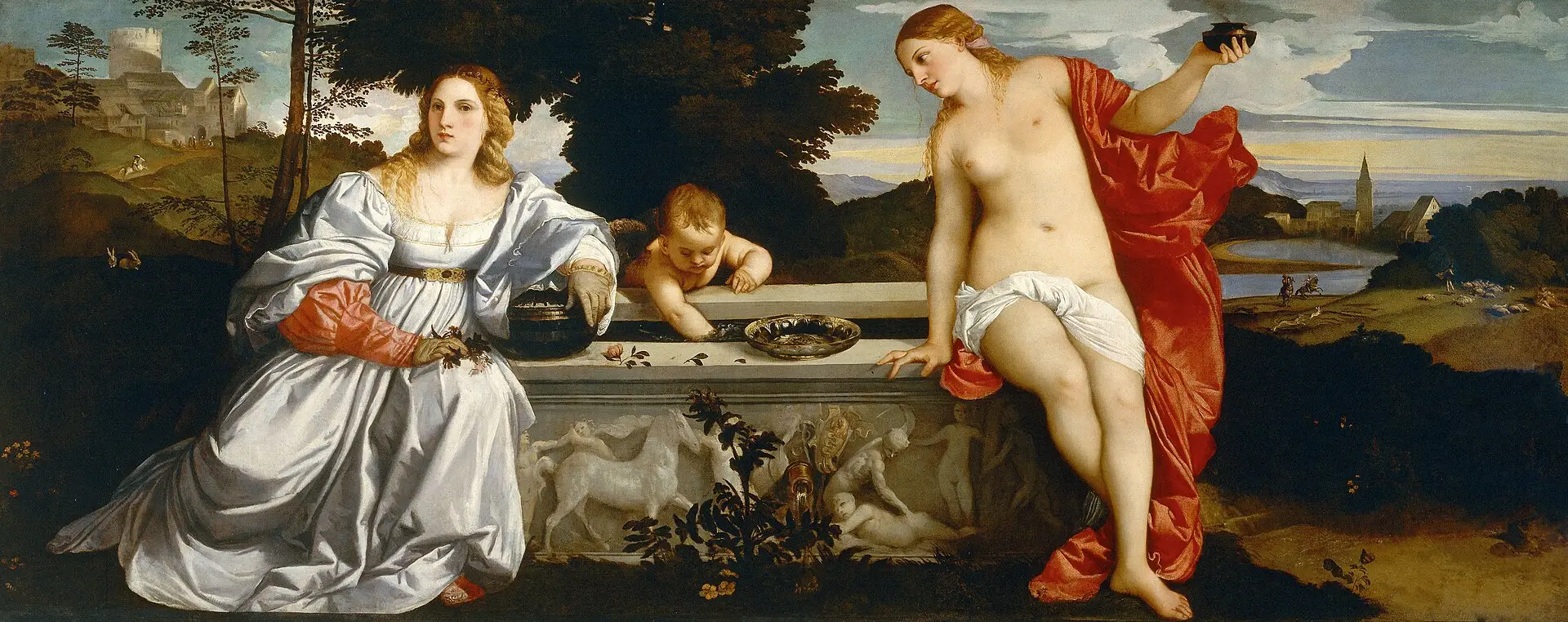
"Amor sagrado y profano" de Tiziano: Una compleja pintura alegórica que explora temas de dualidad y emoción humana.
Amor sagrado y profano Es el tipo de cuadro que te hace detenerte, incluso en un museo concebido para recorrer rápidamente las “obras más destacadas”. Dentro del Galería Borghese, La escena de Tiziano te envuelve en una tensión silenciosa: dos mujeres, una presencia compartida y una historia que se niega a reducirse a un único significado sencillo. Tiqets la describe como una obra clave del Renacimiento veneciano, pintada hacia 1514, y esa sensación de importancia se percibe fácilmente cuando te sitúas frente a ella. La obra es directa y sutil al mismo tiempo, ofreciendo primero belleza y después complejidad, como si pusiera a prueba tu disposición a mirar más allá de la superficie. Si estás de visita Roma Si buscas arte que se te quede grabado en la memoria mucho tiempo después del viaje, este es uno de esos cuadros que hace honor a su reputación.
Ven hoy mismo a ver la obra maestra de Tiziano en la Galería Borghese
La razón por la que esta visita resulta diferente tiene que ver, ante todo, con el lugar en sí. El Villa Borghese Las salas no son pasillos interminables, sino espacios íntimos concebidos para enmarcar obras maestras a corta distancia. Tiqets destaca que la colección se distribuye en dos plantas y 22 salas, y que esa escala es importante porque obliga a centrar la atención. No te pasas horas deambulando con la esperanza de “toparte” con algo grandioso. Pasas de una sala impactante a la siguiente, con la sensación de que cada pared y cada rincón forman parte de un discurso curatorial sobre el gusto, el poder y la belleza. Por eso también el Tiziano de Amor sagrado y profano destaca tanto aquí: está rodeada de obras que te hacen poner el listón muy alto, y aun así se mantiene a la altura sin necesidad de ser el centro de atención ni de una presentación especial.
La mejor forma de abordar el cuadro es considerarlo como una breve conversación, no como una instantánea rápida. Empieza alejándote unos pasos y deja que la composición se asiente. A continuación, acércate y fíjate en cómo se construye la historia a través de contrastes, en lugar de un simbolismo llamativo. Tiqets señala que las figuras suelen interpretarse como representaciones de diferentes aspectos del amor, lo que te ofrece una perspectiva práctica sin limitarte a una única lectura. En lugar de intentar “desentrañar” el cuadro, deja que sea él quien te influya: qué te transmite serenidad, qué te parece intenso, qué te parece deliberadamente ambiguo. En una galería donde el tiempo es limitado, esta es una de las obras a las que merece la pena dedicar cinco minutos completos, porque sigue revelándose cuanto más tiempo te quedas contemplándola.
Por supuesto, una visita a la Galería Borghese nunca se limita a una sola obra de arte, y eso es parte de su encanto. La galería es famosa por la gran cantidad de maestros que alberga: Bernini esculturas que parecen cobrar vida en la piedra, Caravaggio cuadros construidos a partir del drama y las sombras, y obras maestras del Renacimiento que te recuerdan cuánta maestría puede caber en un solo cuadro. Tiqets destaca especialmente obras como la de Rafael La declaración y sitúa el cuadro de Tiziano en ese nivel de calidad propio del “Renacimiento pleno”. Por eso es importante planificar la visita. Cuando sabes lo que vienes a ver —primero Tiziano y luego las salas que lo rodean—, te vas con un recuerdo que parece intencionado, no fortuito.
Normas de acceso por franjas horarias que regulan tu visita de dos horas
A diferencia de los museos, en los que puedes entrar y salir cuando quieras, el Galería Borghese se define por el horario. Tiqets deja claro que los franjas horarias son obligatorias y se dividen en intervalos de 2 horas, y que debes salir a la hora asignada. Eso no es un inconveniente; es una estructura que ayuda a que la visita esté más controlada. Pero sí que cambia la forma en que debes planificar el día. Organiza tu recorrido en función de lo que más te interese y llega con antelación: Tiqets indica que debes llegar al menos 30 minutos antes de la hora de entrada programada y, si llegas tarde, la hora de salida obligatoria no cambia. En otras palabras, la puntualidad te garantiza tiempo para disfrutar del arte, y eso es precisamente lo que quieres si Tiziano es tu prioridad.
También hay normas prácticas que pueden marcar la diferencia entre una experiencia positiva o negativa si las ignoras. Tiqets señala que es obligatorio pasar por un control de bolsos y que no se pueden introducir en el museo bolsos medianos ni grandes; solo se permiten riñoneras pequeñas y bolsos de mano de hasta 21 x 15 cm. Asimismo, indica que deberás mostrar tu entrada digital o impresa en la entrada y canjearla por una entrada física oficial. Estos detalles son importantes porque determinan el ritmo de tu visita. Cuanto más fluida sea tu llegada, más espacio mental tendrás para dedicarte realmente a contemplar Amor sagrado y profano con atención, en lugar de sentirnos presionados por los aspectos logísticos.
Si estás pensando en cómo visitarla, Tiqets ofrece diferentes opciones en función de cuánto contexto quieras conocer sobre la obra. Puedes optar por una simple entrada reservada si te sientes seguro para recorrerla por tu cuenta, o elegir una visita guiada si quieres que un experto te ayude a relacionar el cuadro de Tiziano con la historia más amplia de la colección. En cualquier caso, lo más importante es reservar plaza con antelación, ya que Tiqets destaca que las entradas tienen una gran demanda y pueden agotarse con bastante antelación. Cuando el tiempo es limitado y la colección es tan concentrada, reservar pronto no es solo una cuestión de comodidad: es la diferencia entre ver el cuadro en persona o tener que conformarte con una foto más tarde.
Cuando estés listo para reservar tu franja horaria preferida a través del proveedor, haz la reserva con Tiqets utilizando esta página oficial de venta de entradas de la Galería Borghese y organiza tu visita en torno al momento en que te encuentres cara a cara con Tiziano.
Sal de la galería con una única intención: llevarte el cuadro de vuelta a la ciudad. En cuanto salgas a la calle, Villa Borghese parque, fíjate en cómo ha cambiado tu mirada: cómo interpretas ahora de forma diferente la luz, los tonos de piel y el simbolismo. Esa es la recompensa silenciosa de una obra como Amor sagrado y profano. No solo te impresiona en la habitación. Te hace reorientar la atención y hace que el resto de Roma parecen más nítidas, más intensas y merecen más la pena ser observadas de cerca.
Información útil
Lo que estás reservando: Tu enlace de Tiqets lleva a la Galería Borghese Plataforma de venta de entradas, donde puedes elegir entre varios formatos de visita en función de cómo quieras disfrutar de la colección y organizarte según los franjas horarias obligatorias. La galería funciona con franjas horarias obligatorias de 2 horas, y los visitantes deben salir a la hora indicada, por lo que elegir la opción adecuada depende principalmente del nivel de guía y de los servicios adicionales que desees.
Opción de entrada principal: Galería Borghese: Entrada reservada incluye la entrada a la Galería Borghese. Al finalizar la compra, Tiqets puede ofrecerte mejoras como, por ejemplo, Entrada reservada + audioguía digital o un Entrada con anfitrión diseñado para ayudarte a navegar por la galería con mayor facilidad.
Opciones guiadas: Tiqets también ofrece Galería Borghese: Visita guiada (2 horas, grupo de un máximo de 15 personas) con entrada reservada, visita guiada y auriculares para escuchar al guía. También hay un Visita guiada en grupo reducido (2 horas, grupo de un máximo de 15 personas) con entrada reservada, guía en persona, visita guiada y auriculares. Para una visita personalizada, Visita guiada privada Incluye una entrada y una visita guiada privada con un guía en persona (grupo de un máximo de 9 personas), y el guía adapta la visita a tus intereses.
Combinación urbana: Si quieres combinar el arte con el turismo, Tiqets ofrece una Recorrido en autobús de 3 horas con paradas libres + entrada reservada a la Galería Borghese, que incluye entrada reservada, billete de autobús y audioguía (sin visita guiada en el interior de la galería).
Procedimiento y normas de inscripción: Tiqets indica que debes llegar al menos 30 minutos antes de la hora de entrada prevista; si llegas tarde, la hora de salida obligatoria no cambia. No se permite entrar con bolsos medianos ni grandes; solo se admiten bolsos pequeños o riñoneras de hasta 21 x 15 cm, y hay un guardarropa para los artículos más grandes. Deberás mostrar tu entrada digital o impresa en la entrada y canjearla por una entrada física oficial.
Aspectos destacados de la cancelación: Las condiciones varían según la opción: algunas entradas no son reembolsables ni se pueden cambiar de fecha, mientras que otras opciones permiten la cancelación o el cambio de fecha dentro de un plazo determinado (por ejemplo, 24 o 72 horas antes de la visita, dependiendo del producto).
CÓMO LLEGAR
HISTORIA
En Galería Borghese es inseparable de la figura del cardenal Scipione Borghese, el coleccionista que forjó su identidad y la villa que la alberga. Tiqets señala que el arquitecto Flaminio Ponzio diseñó Villa Borghese como una “villa de fiestas” en la que Scipione pudiera exhibir una extraordinaria colección privada. Ese origen sigue definiendo hoy en día la experiencia del visitante: las salas dan la sensación de ser una residencia cuidadosamente decorada, más que un espacio museístico neutro, y las obras maestras se encuentran en espacios concebidos para poder contemplarlas de cerca.
Según Tiqets, en 1901 el Gobierno italiano adquirió la colección —junto con la galería y el parque circundante— y la abrió al público. Esa transición es importante porque permitió conservar el carácter compacto de la colección. El Borghese no es famoso por su tamaño, sino por su “índice de aciertos”: las esculturas profanas de Bernini, los dramáticos lienzos de Caravaggio y las pinturas renacentistas que establecen un nivel excepcionalmente alto en todas y cada una de las salas.
En ese contexto, la obra de Tiziano Amor sagrado y profano desempeña un papel singular. Tiqets la describe como una obra fundamental del Renacimiento veneciano, pintada hacia 1514, en la que aparecen dos mujeres que a menudo se interpretan como diferentes aspectos del amor. Es un cuadro que merece que se le dedique tiempo, ya que se nutre de la ambigüedad: invita a la interpretación sin reducirse a un único mensaje, y es precisamente por eso por lo que sigue resultando moderno en la forma en que atrae al espectador. Contemplarla en el Museo Borghese no consiste solo en tachar una obra famosa de la lista, sino en situar una compleja imagen renacentista dentro de una colección creada para mostrar el poder del arte como símbolo de estatus, como narrador de historias y como memoria cultural perdurable.
OPINIONES
Amelia (Estados Unidos)
Luca (Italia)
Sophie (Francia)
Consejos
Utiliza una ruta de “dos pasadas” para evitar precipitarte en las mejores salas: la riqueza de la colección del Borghese puede abrumarte si intentas verlo todo la primera vez que la visitas. En su lugar, haz una primera pasada rápida para hacerte una idea general de las salas y localizar lo que más te interesa; después, realiza una segunda pasada más pausada en la que te detengas deliberadamente en algunas de las obras más destacadas. Este método funciona especialmente bien con los cuadros de Tiziano, ya que tus ojos estarán más entrenados cuando vuelvas a verlos. Además, evita el error habitual de dedicar demasiado tiempo al principio a obras de menor importancia y luego recorrer a toda prisa las obras maestras al final de la visita.
Llega temprano y viaja ligero para aprovechar al máximo tu tiempo dedicado al arte: Tiqets indica que debes llegar al menos 30 minutos antes de la hora de entrada programada, y que las normas sobre el equipaje son estrictas (solo se permiten objetos pequeños de hasta 21 x 15 cm). La forma más fácil de disfrutar de la visita es llegar temprano con un bolso pequeño, la entrada a mano y la mente tranquila. Cada minuto que pierdas en el guardarropa o en el punto de canje de entradas es un minuto que no dedicas a las obras maestras. Esto es especialmente importante si visitas el museo en temporada alta o si tienes otra reserva con horario concreto más tarde ese mismo día.
Da prioridad a Tiziano, no lo dejes para “si nos queda tiempo”: con un margen estricto de dos horas, debes centrarte en lo más importante desde el principio. Ve directamente a Amor sagrado y profano Al comenzar tu visita, dedícale un tiempo de verdad a esta obra y, después, explora el resto de las salas. Así te asegurarás de no perderte lo que no te puedes perder, aunque luego acabes quedándote más tiempo con Bernini o Caravaggio. La obra se aprecia mejor siguiendo un método de observación en dos pasos: primero desde lejos, para abarcar toda la escena, y luego de cerca, para apreciar los colores y los detalles. Hacerlo al principio también te permite volver más tarde para echar un segundo vistazo si la sala está más tranquila.
 English
  Italian
  German
  French
  Spanish
  Polish
  Portuguese
  Japanese
  Korean
  Czech
Czech  Chinese
  Russian