
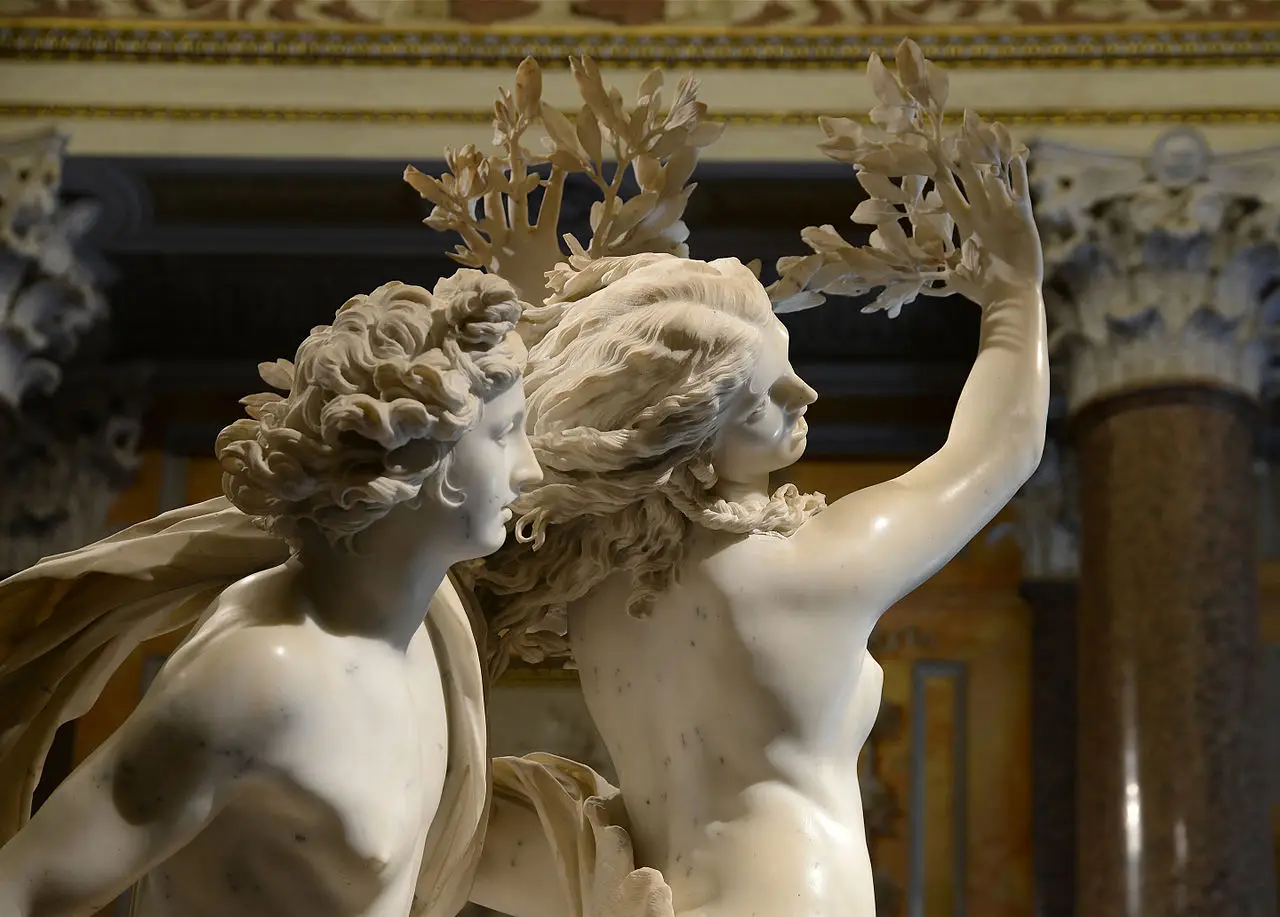
Apollón a Dafné" od Giana Lorenza Berniniho: Berniniho: úžasná mramorová socha zobrazující mýtus o Apollónovi a Dafné, zachycující okamžik její proměny ve vavřínový strom.
Vstoupil jsem do Galleria Borghese zaměřit se na jedno umělecké dílo je chytrá strategie, protože místnosti jsou plné mistrovských děl a váš čas se tak přirozeně rozvrhne. Pokud je vaší prioritou Apollo a Dafné, přijdete si prohlédnout sochu, která z dálky nejen “vypadá krásně” – mění se totiž podle toho, jak se pohybujete. Z jednoho úhlu pohledu představuje pronásledování, z jiného kapitulaci a z dalšího proměnu odehrávající se uprostřed nádechu. V Řím, jen málokterý zážitek v muzeu je tak bezprostřední jako sledovat, jak se mýtus proměňuje v hmotu, vytesanou tak precizně, že téměř zapomenete, že se díváte na kámen.
Podívejte se na sochu Apolla a Daphne v Galerii Borghese v Římě
Síla Bernini Jeho síla spočívá v tom, že dokáže vyvolat dojem, že pohyb je nevyhnutelný. K pochopení toho, co se děje, nepotřebujete dlouhé vysvětlení: těla v plném běhu, vlající látka, zlomový okamžik zachycený přesně v té vteřině, kdy se stává nezvratným. Socha je stvořena k procházení. Pokud stojíte jen na jednom místě, získáte silný obraz; pokud pomalu obcházíte sochu, pochopíte celý příběh. Nejlepší je dovolit si tiše se kolem ní pohybovat, nechat oči sledovat linii pronásledování a pak se náhle zastavit u detailů, které mění vše – u rukou, které už nevypadají jako ruce, u kůže, která se mění v kůru, u vlasů, které se už nechovají jako vlasy.
Právě proto je také důležité prostředí. To Villa Borghese Sály nejsou nekonečné chodby; jsou útulné a navržené tak, aby vás přiblížily k významným dílům, aniž byste se unavili jako v obrovském muzeu. Právě tato blízkost způsobuje, že Apollo a Dafné působí osobně. Můžete hledat změny v textuře, díky nimž je proměna uvěřitelná, a všimnout si, jak je socha umístěna tak, aby se příběh odhaloval postupně, vrstvu po vrstvě. Není to předmět, který by tam jen “stál”. Socha předvádí své představení a galerie se stává tichým divadlem, kde tempo udává váš pohyb.
To, co tento zážitek ještě umocňuje, je jeho okolí. Ten Borghese Tato sbírka je proslulá svou soustředěností: při její prohlídce je základní úroveň kvality natolik vysoká, že vaše smysly zůstávají v pohotovosti při přechodu z jedné místnosti do druhé. To je důležité, protože to mění způsob, jakým vnímáte. Přicházíte s očekáváním, že na vás něco udělá dojem, a také se tak stane – ale různými způsoby. Přechod od sochařství k malířství, od Baroko od dramatického napětí až po vyváženost renesance – to vám vycibří postřeh. Než se dostanete k Apollo a Dafné, už máte cit pro řemeslnou zručnost, díky čemuž na vás detaily zapůsobí ještě silněji.
Pravidla pro časově omezený vstup v rámci vašeho termínu v Galerii Borghese
Tato návštěva dopadne nejlépe, když k ní přistupujete jako k naplánované schůzce, nikoli jako k náhodné návštěvě. Tato Galleria Borghese Návštěva se obvykle uskutečňuje v časových intervalech a váš pobyt v muzeu je koncipován spíše jako cílený než jako volný. Tato struktura je výhodou, pokud přicházíte kvůli jedné konkrétní atrakci, protože zajišťuje plynulý průběh návštěvy a pomáhá zachovat atmosféru v jednotlivých sálech. Znamená to také, že nejlepší postup je jednoduchý: přijďte brzy, vstupte v klidu a prohlédněte si Apollo a Dafné přijďte na začátek svého časového úseku, abyste měli čas se vrátit a podívat se znovu, pokud bude místnost při vašem prvním příchodu plná.
Chcete-li si tento zážitek užít naplno, naplánujte si prohlídku ve dvou fázích. První fáze: najděte sochu, vnímejte celou kompozici a určete si klíčové úhly, ke kterým se chcete vrátit. Druhá prohlídka: vraťte se a zpomalte – teprve tehdy si všimnete, jak je příběh utvářen drobnými fyzickými detaily, jak povrchy odrážejí světlo a jak je “zázrak” proměny vybudován na základě nesmírně promyšleného tesání. To je také okamžik, kdy dílo přestává být jen slavným názvem a stává se vzpomínkou, kterou můžete popsat vlastními slovy.
Až budete připraveni si u dodavatele rezervovat místo, proveďte rezervaci přes Tiqets pomocí tato stránka s vstupenkami do Galerie Borghese a naplánujte si návštěvu tak, abyste stihli vidět Apollo a Dafné s dostatečným klidem, aby mohl kroužit, zastavit se a vrátit se.
Posledním trikem je nechat sochu, aby vás doprovázela ven z místnosti. Až si ji prohlédnete, všimněte si, jak se vaše pozornost v zbytku galerie mění: začnete hledat pohyb, zvraty, okamžiky zachycené v maximálním napětí. To je tichá odměna za Bernini. Nepamatujete si jen to, co jste viděli – pamatujete si i ten pocit, když jste sledovali, jak se příběh mění v reálném čase, na místě, které odměňuje pozorné sledování.
Užitečné informace
Typ vstupenky: Tento produkt společnosti Tiqets vám nabízí možnost vstupu v konkrétní čas pro Galleria Borghese na adrese Řím, kde Apollo a Dafné patří k nejvyhledávanějším dílům. Návštěva se obvykle odehrává v rámci rezervovaného časového úseku, což pomáhá udržet pořádek v galeriích a zajistit, že zážitek z návštěvy je intenzivnější než při běžné návštěvě muzea bez rezervace.
Formáty záznamů: V závislosti na tom, co je k dispozici pro vámi zvolený termín, může Tiqets nabízet samotný rezervovaný vstup, rezervovaný vstup v kombinaci s digitálním audioprůvodcem nebo možnosti zahrnující asistenci u vchodu (často označované jako „hosted entry“). Tiqets může také uvádět varianty prohlídek s průvodcem, které se hodí, pokud chcete, aby vás průvodce provedl Bernini zapadá do širšího kontextu sbírky a zajišťuje, aby prohlídka proběhla efektivně v rámci vymezeného časového úseku.
Co je zahrnuto ve vaší vstupence: Vaše vstupenka platí pro samotnou prohlídku Galerie Borghese a umožňuje vám vstup do muzejních sálů uvnitř Villa Borghese kde je vystavena stálá expozice. Prohlídku si můžete prohlédnout vlastním tempem, pokud si nevyberete variantu s průvodcem.
Jak funguje jízdenka při příjezdu: Naplánujte si příjezd s předstihem, aby vám vstupní formality neukrátily čas na prohlídku. V mnoha významných muzeích vás mohou před vstupem do výstavních sálů požádat o potvrzení nebo výměnu poukazu či vstupenky u vchodu. Cestujte s minimem zavazadel, aby vstup proběhl hladce, a mějte vstupenku připravenou v mobilu.
Očekávané načasování: Vzhledem k tomu, že vstup je časově omezen, naplánujte si návštěvu podle toho, co je pro vás nejdůležitější. Pokud Apollo a Dafné je-li to váš hlavní cíl, navštivte ho nejprve a pak se tam vraťte později, abyste si ho v klidu prohlédli podruhé.
Zrušení a změny: Pravidla pro zrušení a změnu termínu se mohou lišit v závislosti na typu vstupenky (standardní vstup vs. vstup v rámci hostitelského programu vs. prohlídka s průvodcem). Přečtěte si podmínky uvedené při dokončování objednávky u vámi vybrané možnosti, abyste přesně věděli, co se na vaši rezervaci vztahuje.
JAK SE TAM DOSTAT
HISTORIE
Gian Lorenzo Bernini vytvořeno Apollo a Dafné na počátku dvacátých let 17. století pro Kardinál Scipione Borghese, sběratel, jehož vkus a ambice pomohly utvářet identitu Galleria Borghese. Socha zachycuje scénu z Ovidiových „Metamorfóz“: Apollónovo pronásledování Daphne a její proměnu v vavřínový strom v okamžiku, kdy se k ní přiblíží.
Historický význam tohoto díla spočívá v tom, jak definuje Baroko způsob vyprávění příběhů prostřednictvím sochařství. Místo toho, aby představil klidný, hotový výsledek, se Bernini soustředí na zlomový okamžik – na tu vteřinu, kdy se pohyb stává osudem. Kompozice je koncipována tak, aby ji bylo možné vnímat ze všech stran, což diváka vybízí k pohybu, objevování a skládání příběhu prostřednictvím měnících se úhlů pohledu.
V průběhu času se tato socha stala neoddělitelnou součástí identity borgheseské sbírky: jde o charakteristické dílo, které dokládá, proč je galerie proslulá intenzitou a realismem svých sochařských sálů. Je to také připomínka toho, že Borghese není muzeum sestavené z náhodných akvizic. Ve své podstatě je to odkaz sběratele, který postavil dům pro mistrovská díla – a poté jej naplnil díly, jejichž účelem je ohromit.
RECENZE
Emily (Spojené státy)
Luca (Itálie)
Sophie (Francie)
Tipy
Umístěte Apolla a Daphne na první místo ve svém programu. Při časově omezené návštěvě je třeba dát přednost tomu nejdůležitějšímu na začátek. Jděte rovnou k Apollo a Dafné hned jak vstoupíte, i když máte v plánu si vše ostatní prohlédnout až později. Tím si zajistíte, že si nenecháte ujít to, co si rozhodně nesmíte nechat ujít, pokud se v jednotlivých sálech vytvoří fronta nebo pokud se nečekaně zdržíte někde jinde. Po prvním prohlídce se vraťte později na druhou prohlídku; detaily na vás zapůsobí silněji, až uvidíte celou kompozici.
Použijte metodu prohlížení ze dvou úhlů. Nesnažte se sochu “pochopit” pouze z jednoho úhlu pohledu. Vyberte si záměrně dva úhly: jeden, který ukazuje snahu, a druhý, který nejjasněji odhaluje proměnu. U každého z nich strávte celou minutu, aniž byste pořizovali fotografie. Teprve poté pořiďte několik snímků. Tato metoda zabrání tomu, aby se zážitek stal pouhým fotografováním, a pomůže vám zapamatovat si sochu jako příběh, nikoli jen jako obrázek.
Cestujte s lehkým zavazadlem, aby vstup proběhl hladce. Muzea s časově omezeným vstupem oceňují návštěvníky, kteří přicházejí bez zbytečných zdržení. Vezměte si s sebou jen to nejnutnější, abyste se nezdržovali kontrolou zavazadel nebo hledáním věcí u vchodu. Mějte vstupenku připravenou v telefonu, přijďte s předstihem a považujte vstupní fázi za součást přípravy na váš zážitek z umění. Čím klidnější budete při vstupu do sálů, tím více si všimnete detailů na povrchu soch a v jejich přechodech.
 English
  Italian
  German
  French
  Spanish
  Polish
  Portuguese
  Japanese
  Korean
  Czech
Czech  Chinese
  Russian